VOLVO PENTA 834722-1 Raw Water Suction Line Copper Pipe
fits make: Volvo.
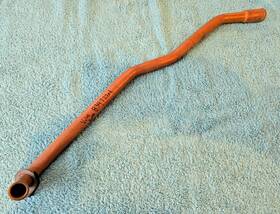
( Brand: Volvo Penta ), ( Manufacturer Part Number: 834722-1 ), ( Part Type: Line Pipe Suction ), ( Country Of Origin: Sweden )
Review VOLVO PENTA #834722-1 Raw Water Suction Line Oem Copper Pipe
The Volvo Penta 834722-1 raw water suction line is a crucial component in the cooling system of Volvo Penta engines. This copper pipe is specifically designed to transport raw water from the external water source to the engine for cooling purposes.
Measuring 10 meters in length, this copper pipe is suitable for use in marine and industrial applications where the engine requires a continuous supply of cool water. Its raw water application makes it robust and durable, capable of withstanding the harsh conditions of frequent exposure to water and varying water temperatures.
The Volvo Penta 834722-1 raw water suction line is made from high-quality copper, ensuring excellent conductivity and heat transfer properties. Copper is a preferred material for raw water applications due to its resistance to corrosion and its ability to maintain its strength and shape even under high water pressure.
The pipe features smooth, uniformly sized internal and external diameters, ensuring efficient water flow and minimizing turbulence. This results in lower pumping power requirements and improved engine performance. The pipe's walls are also thick enough to provide adequate insulation, helping to maintain a consistent water temperature and ensuring optimal engine cooling.
The Volvo Penta 834722-1 raw water suction line comes with pre-threaded ends, making it easy to install using standard threaded fittings. The threaded ends also provide a secure connection, preventing leaks and ensuring efficient water transfer. The pipe's copper material is also easy to join using various brazing or soldering techniques, providing additional flexibility for installation.
In summary, the Volvo Penta 834722-1 raw water suction line is a high-quality, durable, and efficient solution for transporting raw water to Volvo Penta engines for cooling purposes. Its use of high-quality copper material, smooth internal and external diameters, and pre-threaded ends make it a reliable and easy-to-install component for marine and industrial applications.
Volvo Penta 834722-1 raw water suction line is a copper pipe used in marine applications for water intake. Like any other product, it comes with its advantages and disadvantages.
Pros:1. Corrosion Resistance: Copper pipes are highly resistant to corrosion, making them an ideal choice for marine environments where saltwater and other harsh chemicals are present.
2. Durability: Copper pipes have a long lifespan and can withstand high water pressure. They are less prone to leaks and require minimal maintenance.
3. Thermal Conductivity: Copper has good thermal conductivity, which makes it an excellent choice for applications where water temperature needs to be regulated.
4. Easy to Install: Copper pipes are relatively easy to install as they can be bent and shaped to fit into tight spaces.
Cons:1. Cost: Copper pipes are more expensive than other materials like PVC or plastic pipes.
2. Expansion and Contraction: Copper pipes expand and contract with changes in temperature. Proper insulation and expansion loops are necessary to prevent damage.
3. Electrolysis: Copper pipes can corrode if they come into contact with dissimilar metals, leading to electrolysis. Proper grounding and bonding are necessary to prevent this.
Conclusion:The Volvo Penta 834722-1 raw water suction line copper pipe has several advantages, including corrosion resistance, durability, thermal conductivity, and ease of installation. However, it also comes with some disadvantages, such as cost, expansion and contraction, and electrolysis.
Recommendation:If you are looking for a raw water suction line for a marine application and are willing to pay a higher price for superior corrosion resistance and durability, then the Volvo Penta 834722-1 copper pipe is an excellent choice. However, if cost is a significant factor, you may want to consider alternative materials like PVC or plastic pipes. Additionally, proper installation, insulation, grounding, and bonding are essential to ensure the longevity and performance of the copper pipe.
Details:
specifications otsterndriv:
- for makes: Volvo
- brand: Volvo Penta
- mpn: 834722-1
- part type: Line Pipe Suction
- country of origin: Sweden
seller otsterndriv:
- city: Bakersfield, California
- # reviews: 2860
- rating: 100.0%
returns otsterndriv:
- policy: Returns Accepted
- time: 30 Days
- paid by: Seller
payments otsterndriv:
- other
- wallet: Google-pay
- credit card: Diners-club
general otsterndriv:
- condition: New
- Boat Parts > Sterndrive Motors Components > Other
shipping otsterndriv:
- class: Standard
- transit: 4-8 Days
- carrier: USPS
- cost: $18.50
- type: Calculated
- service: USPS Ground Advantage
offer otsterndriv:
- options: Ship-to-home
- availability: In Stock
- sold: 0
- started: January 22, 2026
- quantity: 1
Volvo Penta 834722-1 Is Similar To:
- 0312797 3852111 Volvo Penta Lot Of New Oem Thermostat Gaskets (35.4% similar) This is a factory original equipment, not aftermarket...(December 19th, 2018)
- 1219237 Volvo Penta Cylinder Connecting Rod (37.5% similar) Condition is used. These are factory parts Volvo Penta AQ120B 4 cylinder connecting rod. Skirt dimensions are the rods matched...(March 29th, 2019)
- 12554256 12554257 Gm Volvo Penta Vortec Valve Covers Pair (39.7% similar) 3l vortex v6 in good condition. What you see is will receive. Used pair of valve covers from a Volvo Penta gm...(February 17th, 2019)
- 1276141-7 Volvo Penta Nos Oem Marine (40% similar) Nos oem Volvo Penta marine...(October 26th, 2018)
- 1332644-2 Volvo Penta Nos Oem Head Gasket Cyl Ships From Usa (34.1% similar) ...(April 12th, 2019)
- 1378493 897244-0 876356-7 430039-8 876300-5 Volvo Penta Lot (21.9% similar) 00GASKET kit 00WASHER 99GASKET Volvo Penta parts lot 1INCLUDES the following items gasket estimated retail value 12. 99HEAD gasket 3VOLVO Penta part 8VOLVO 90VOLVO 1HEAD set...(October 18th, 2018)
- 1378645-4 Volvo Penta Omc Stern Drive Cylinder Head Gasket (40.9% similar) ...(October 12th, 2018)
- 1378879-1 Volvo Penta Stern Drive Intake Gasket Or New (42.3% similar) Factory oem gasket...(March 9th, 2019)
- 1378909 Volvo Penta Stern Drive Valve Cover Gasket Oem New (39.4% similar) T452D Jocelyn. New part in its original packaging...(September 25th, 2018)
- 15294-c Volvo Penta Power Steering Fits (40.7% similar) Good clean unit frees...(September 28th, 2018)
- 170340 Tempo Marine Lower Gear Case Drain Plug Gasket Volvo Penta (16.4% similar) Tempo marine lower gear case drain plug gasket Volvo Penta VOP340...(October 25th, 2018)